
The Origins
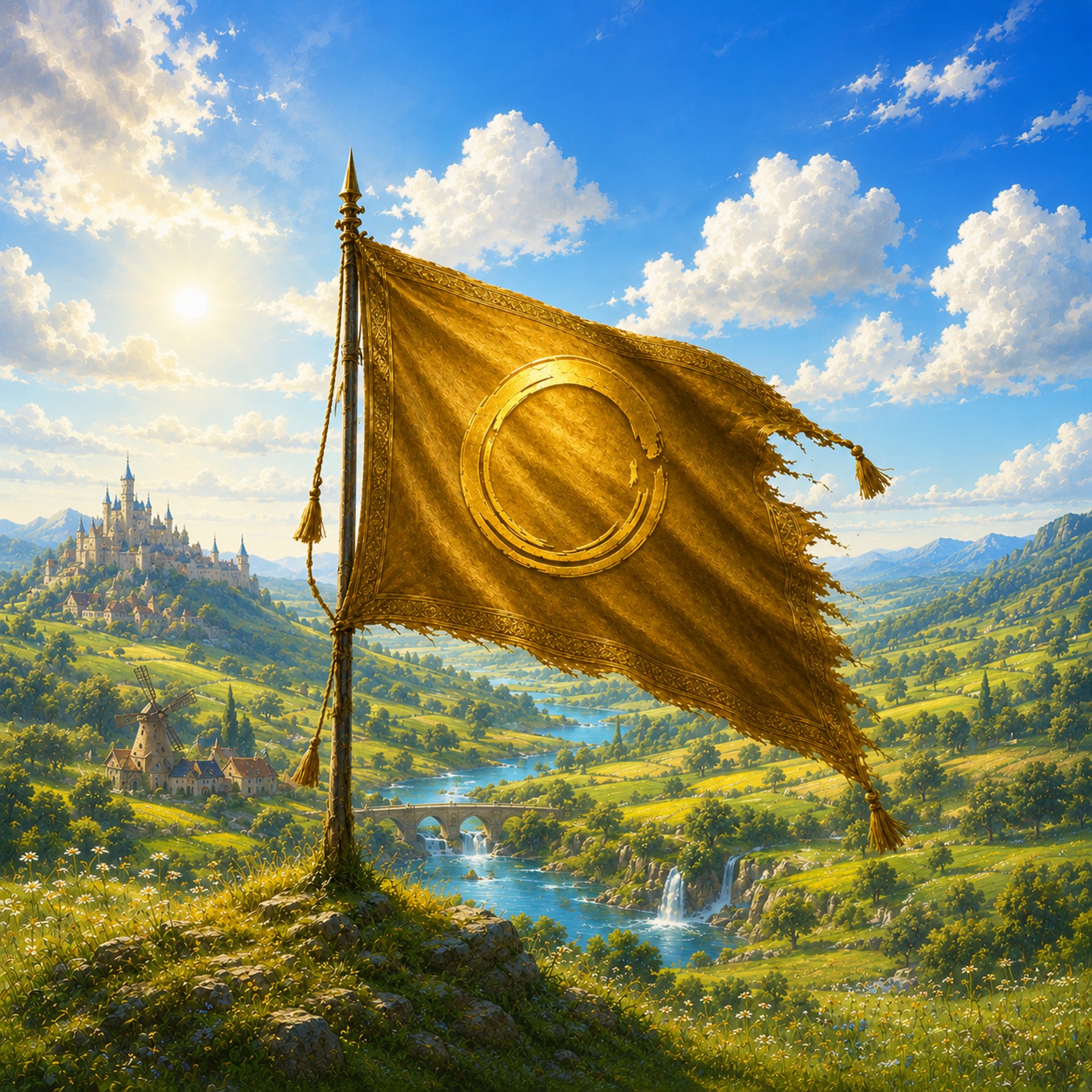
Harmonia Era — Age of Trinity
The World Before Questions
Before division, before constructs, before the world learned to fear what it could create, there was Harmonia.
A continent untouched by conflict, resting in quiet balance beneath endless skies.
Harmonia was round in form, lush with forests and open plains, enclosed entirely by towering mountains that rose like the edges of the world itself. Beyond them lay lands no one had seen and few had ever thought to imagine. The people of Harmonia did not fear what existed outside the mountains. They simply saw no reason to seek it.
Everything they needed already existed within.
Life moved gently across the continent. Villages of scattered huts rested between rivers and grasslands, some subtly strengthened by powers granted through ancient blessings. Progress came slowly, but it came without struggle. Generations passed not in conquest or ambition, but in quiet continuity.
At the center of Harmonia stood the great Arena.
Encircled by moorland and fed by four rivers that divided the continent into equal quadrants, it served as the heart of all gathering. Festivals were held there beneath banners and lanterns. Songs echoed across its stone foundations. And at the center of every celebration stood the sacred artefact upon which all Harmonia placed its faith.
The Trinity Spin.
No one knew where it came from.
No record spoke of its creation. No story claimed ownership of its power. It had existed longer than memory itself, passed from generation to generation not as a weapon, but as a blessing.
The people never questioned it.
There was no need.
The Trinity Spin consisted of three great rings turning around a shared center, each holding twelve ideologies within its motion. The first ring represented Zodiac—granting Form, protection, and armor. The second represented Horoscope—granting Power through weapons and force. The third represented Arcane—granting Will through magic and manifestation.
None was considered greater than the others.
In Harmonia, balance was sacred.
Each year, the youth of the continent gathered at the Arena to stand before the Trinity Spin. From childhood until the age of twenty-one, every Harmonian was permitted one attempt each year.
A hand would be placed at the center.
If the Trinity Spin responded, the rings would turn.
Those chosen received blessings shaped by the three ideologies—powers unique to them alone. Form, Power, and Will intertwined through random alignment, granting abilities no person could predict or control.
If the Spin remained still, nothing happened.
There was no shame in this.
The individual simply returned the following year, and the year after, until their final chance passed. Some were chosen early. Some were never chosen at all.
Yet Harmonia never divided the blessed from the ordinary.
Those granted power became protectors, builders, and guardians of the continent. Those without it lived alongside them without resentment. The people believed deeply in a simple truth:
What was given was meant to be given.
What was not given was never lost.
And so the world remained whole.
No ideology sought superiority.
No one pursued power beyond balance.
No one asked whether the Trinity Spin could be understood.
Because Harmonia was not a civilization built upon answers.
It was a civilization built upon acceptance.
And for a long time, that was enough.
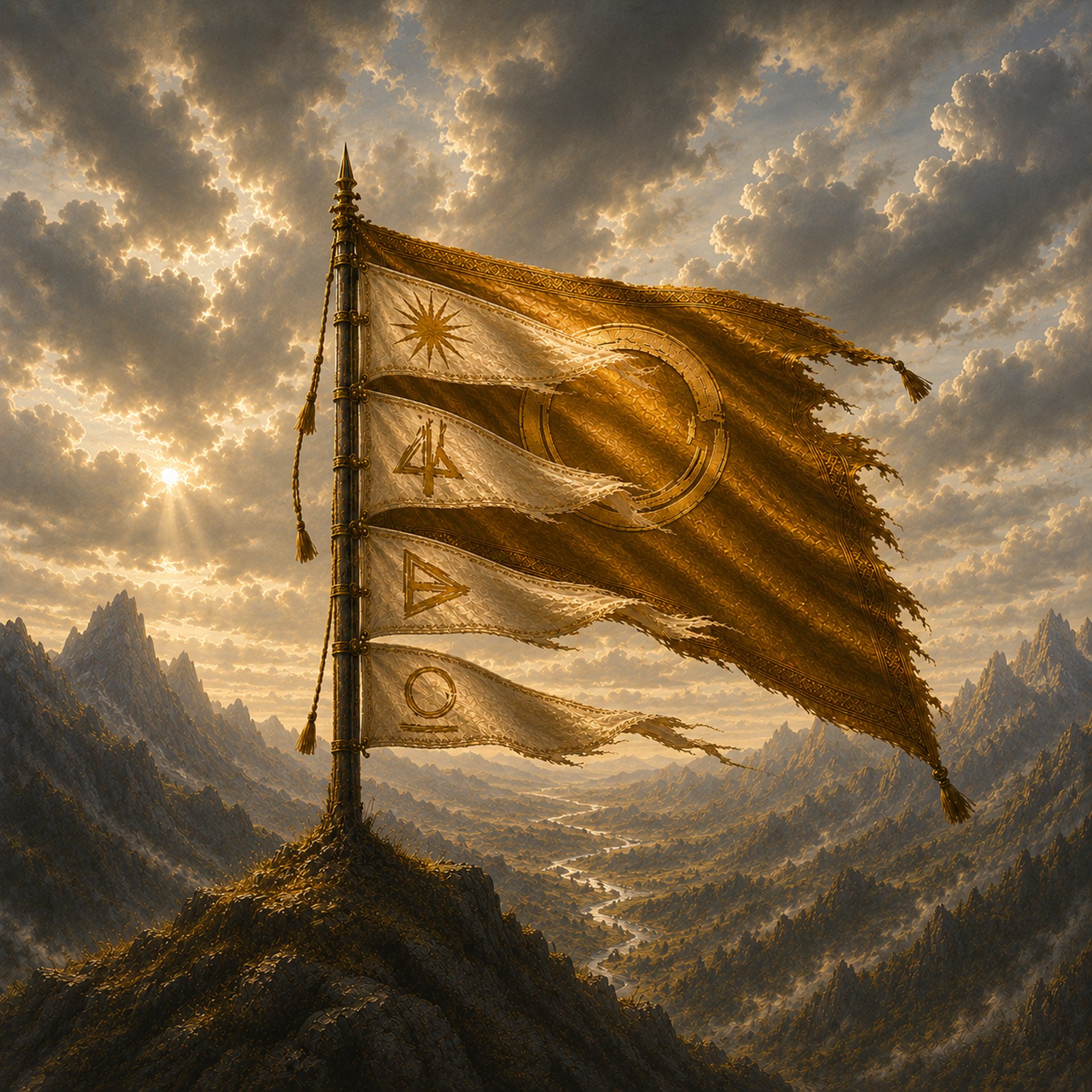
AXIS Era — Age of Division
The World That Began to Question
There was no moment when Harmonia chose to change.
There was only a question.
It began quietly, spoken without intent to disrupt:
What if one ideology is stronger than the others?
At first, it passed like wind through leaves—noticed, then gone. The people of Harmonia had never needed to compare what was meant to be balanced. The Trinity Spin had always been accepted as whole, its three rings equal, its gifts unquestioned.
But something about the question lingered.
It returned in smaller conversations. Between friends. Between families. In passing remarks that carried no accusation, only curiosity. What had once never been spoken slowly became something that could not be ignored.
Weeks turned to months. Months to years.
What had once been unthinkable became… discussable.
Groups began to form—not in opposition, but in interest. Those drawn to the strength of Form gathered to study the Zodiac. Those fascinated by the raw expression of Power turned to the Horoscope. Others, captivated by the unseen and intangible, devoted themselves to Arcane Will.
They did not call themselves factions. Not yet.
They met at the edges of the continent, where mountains rose like silent witnesses. There, huts were built. Then halls. Then schools. Places not just to live—but to think.
The untrinitised came first, seeking meaning beyond what had not been granted to them. Then came the young, curious and unbound. Eventually, even the trinitised joined—those who had already received power, now seeking to understand it.
Over decades, these gatherings grew.
Names emerged.
Axiom, devoted to Form.
Ionis, devoted to Power.
Xyra, devoted to Will.
The first division of Harmonia was not drawn by land—but by belief.
Yet even then, there was no war.
The factions gathered, not to fight, but to speak. They shared findings, challenged one another, argued in measured tones. What began as debate became tradition. What was once discussion became celebration.
A festival of thought.
Harmonia did not fracture.
It adapted.
For a time.
Then came the second question.
What if there is power beyond the Trinity Spin?
This time, the silence that followed was heavier.
The first question compared what was known. This one reached beyond it. There was no ideology to defend, no ring to study. Only uncertainty.
The conversations did not spread as quickly. They moved cautiously, carefully. But they did not disappear.
Years passed before the answer began to take form.
Not from belief—but from inquiry.
A different kind of gathering began to take shape. Not in devotion to any ring, but in pursuit of understanding itself. These were the thinkers, the builders, the ones who observed patterns not in ideology, but in structure.
Most had never been chosen by the Trinity Spin. Some had. It did not matter.
They built.
They tested.
They combined.
From fragments of Form, Power, and Will, they created something new—not granted, but constructed. Through study and engineering, they uncovered ways to replicate and manipulate what had once been sacred.
They called themselves Sigil.
The fourth faction.
Where the others sought superiority, Sigil sought possibility.
And in doing so, they changed Harmonia in ways no one had prepared for.
Technology advanced. Tools evolved. The blessings of the Trinity Spin were no longer the only path to empowerment. And yet, the ceremonies continued. The Arena still gathered the youth. The Spin still turned—or did not.
On the surface, nothing had changed.
Harmonia remained peaceful. Ordered. Whole.
But beneath it, something had shifted.
Debate became competition.
Curiosity became pride.
Belief became something to defend.
And slowly, quietly—
the fear of being lesser began to take root.
The world had not yet broken.
But for the first time in its history,
it had begun to divide.
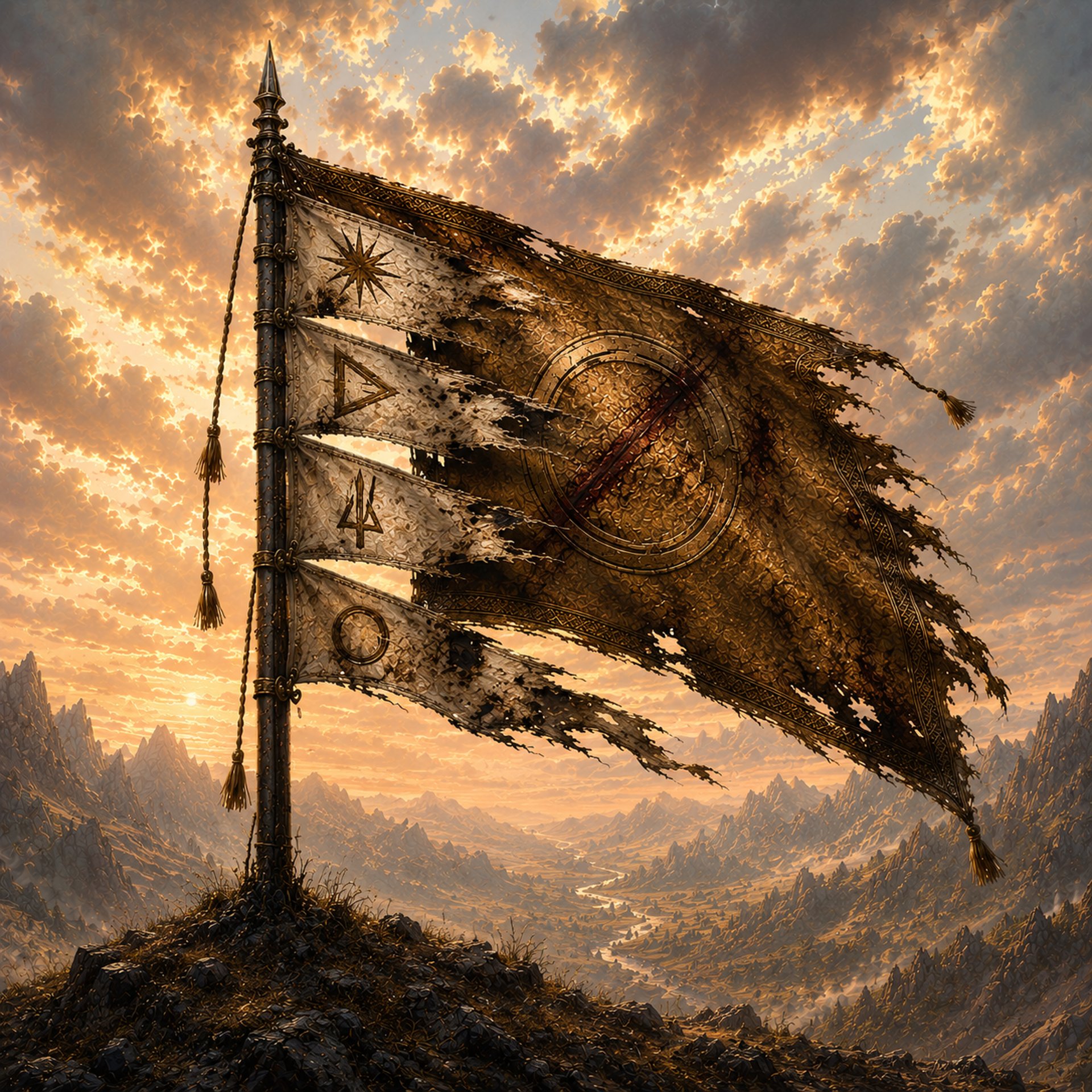
Construct Era — Age of Fracture
The World That Built Beyond Itself
As the years passed, Sigil’s presence within Harmonia became impossible to ignore.
What began as curiosity had become contribution. While the Trinity Spin remained sacred and the ceremonies continued unchanged, the world around it steadily transformed through Sigil’s hands. Roads strengthened. Homes evolved from fragile huts into reinforced dwellings. Towers rose where open fields once stood.
Harmonia progressed not through revelation—but through construction.
The other factions continued their pursuit of ideological superiority. Axiom refined the principles of Form. Ionis pursued the perfection of Power. Xyra deepened its understanding of Arcane Will. Yet for all their decades of debate and study, their philosophies remained largely intangible—spoken, demonstrated, believed, but never truly embodied.
Sigil was different.
Sigil sought proof.
Not proof that the Trinity Spin was false, nor that the old beliefs were meaningless. Only that empowerment could exist beyond what the sacred artefact granted.
By day, they built Harmonia forward.
By night, they disappeared into hidden laboratories beneath towers lit long after the continent slept.
Years passed before they revealed what they had been creating.
During one of Harmonia’s great festivals, before the gathered factions and beneath the gaze of the Arena, Sigil unveiled a small metallic figure.
It resembled an insect.
Children had built figurines before from mud, wood, and scrap. But this was different. Its body was forged from polished metal. Its joints moved smoothly without separating. Every segment felt deliberate, engineered, alive in a way no crafted object had ever seemed before.
Sigil called it a Construct.
The people stared in awe.
For the first time, ideology had become physical.
Sigil shared its methods openly. Despite rising tensions between the factions, knowledge spread quickly across Harmonia. The age of theory began to give way to the age of creation.
Technology accelerated.
Wires appeared. Electronic components followed. Circuits, mechanisms, artificial systems—each breakthrough reshaping the continent faster than the last. What once took generations now changed within years.
By the next great festival, Sigil stood as Harmonia’s most influential faction, whether the others wished to admit it or not.
Axiom unveiled magnificent metallic beasts inspired by the Zodiac.
Xyra presented floating arcane spheres pulsing with elemental force.
Ionis showcased towering warriors, centaurs, and weapon-bearing constructs infused with overwhelming power.
The crowd roared at every display.
Then Sigil stepped forward.
At first, they presented the same small bug-like construct from years before. The applause was polite, restrained. Familiarity had dulled wonder.
Then its eye illuminated.
Without any aid from trinitised users, the construct began moving on its own.
It chirped.
It beeped.
It reacted.
The Arena erupted.
But Sigil had not finished.
A cloaked figure entered beside one of their scientists. The crowd fell silent as the covering was removed.
Beneath it stood a humanoid construct.
No glowing manipulation.
No visible trinity enhancement.
No suspended control.
It simply walked.
The reaction shook the Arena itself.
Sigil spoke then of something called the Core—a breakthrough enabling independent automation. But few truly listened. The people did not understand the explanation.
They only understood what they had seen.
Sigil had surpassed expectation once again.
Decades followed, and the factions evolved alongside their creations.
Axiom mastered the embodiment of Form through colossal zodiac constructs.
Xyra shaped arcane manifestations into living vessels of elemental force.
Ionis perfected constructs built for speed, combat, and overwhelming power.
Meanwhile, Sigil advanced further still.
Their constructs marched, worked, performed, and operated with increasing independence. Manufacturing no longer depended entirely on trinity empowerment. Resources could be produced artificially. Systems could sustain themselves.
The final festivals of Harmonia became spectacles of impossible ambition.
Then came the last one.
The Arena overflowed with celebration as each faction displayed the peak of its achievements. Metallic beasts roared. Arcane constructs illuminated the sky. Armored creations marched in flawless formation.
Sigil’s procession arrived last.
Humanoid constructs performed music in synchronized precision while mechanical attendants moved among them with perfect coordination.
Then the great bird appeared.
A majestic construct of polished metal and enormous wings descended into the Arena skies. It circled the spectators gracefully, drawing thunderous applause before disappearing beyond the mountains overhead.
The celebration continued.
Hours passed.
Then the bird returned.
The crowd cheered again, expecting another performance.
But Sigil’s scientists did not cheer.
One by one, the other constructs also re-entered the Arena.
The applause grew louder—then uncertain.
Something was wrong.
The constructs no longer responded to their factions.
The great bird spread its wings and released a piercing metallic screech across the Arena.
The other constructs turned toward the crowd.
At first, some believed it was still part of the spectacle.
Then the constructs charged.
Bodies were torn apart before understanding arrived. Blood splashed across stone seats once filled with celebration. Exits collapsed beneath rampaging machines. Panic consumed the Arena as thousands tried to flee through pathways already destroyed.
Above them, the bird construct descended once more, its bladed wings carving through spectators in sweeping arcs.
Screams replaced music.
Chaos replaced ceremony.
Harmony ended in minutes.
The great Harmonia Arena collapsed beneath fire, steel, and ruin.
And silence followed.
For a moment, it seemed the world itself had been buried beneath the rubble.
Then the debris shifted.
A construct crawled free.
Then another.
And from the broken remains of the Arena, the great bird emerged once more—scarred, towering, and alive.
No human survived to explain what happened that day.
Only the constructs remained.
Get in touch
Echoes of Harmonia is an ongoing independent creative project combining worldbuilding, storytelling, visual design, and game concepts. Follow development updates or get in touch to learn more.
Sitemap
© 2025–2026 Echoes of Harmonia. All rights reserved.
An independently developed original intellectual property.
Contacts
voices@echoesofharmonia.com